What Are Wolves Really Saying?
In the heart of Yellowstone, wolves are howling, growling, whining, barking, and communicating in ways we are only beginning to understand. Never before has it been possible to document this wide array of wild wolf sounds, let alone interpret what they might mean. That shift has set the stage for a research effort unlike any undertaken before.
In the summer of 2023, Yellowstone Forever launched an ambitious bioacoustics research initiative to deepen our understanding of wolves. Led by Dr. Dan Stahler, head of the Yellowstone Wolf Project, in collaboration with Dr. Jeff Reed of Grizzly Systems and founder of The Cry Wolf Project, this study has created the world’s largest database of wild wolf vocalizations. It also represents the first large-scale effort to integrate bioacoustic monitoring with traditional wolf tracking methods.
What is Bioacoustics?
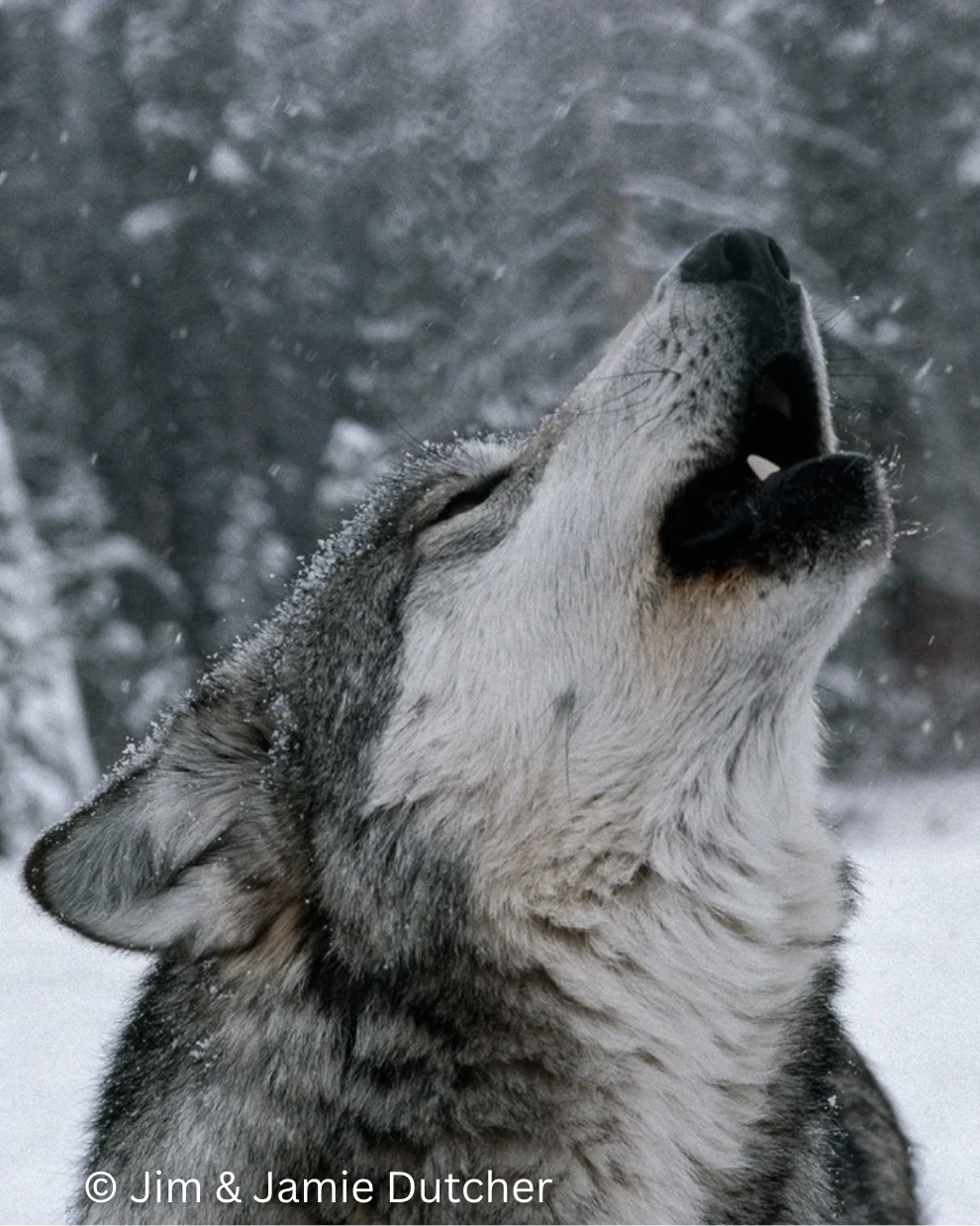
Bioacoustics, simply put, is the study of how animals produce, transmit, and receive sound. For wolves, sound is essential. For example, whines and whimpers often signal frustration or anxiety, but can also express friendly interaction. Growls and snarls are meant to be threatening or defensive. Barking is rare and usually serves as an alarm signal. Howls, perhaps the most iconic wolf sound, appear to be about connection: bringing pack members together, signaling territorial or mating intentions, or even mourning the loss of a pack mate. Listen to vocalizations of the Sawtooth Pack here.
Behind the Research: Listening to Wolves
Researchers in Yellowstone use two primary recording devices: autonomous recording units (ARUs) and audio logger devices. There are currently 27 ARUs deployed across Yellowstone’s northern range, arranged in a systematic 6-kilometer grid spanning six known wolf pack territories. An additional 15 ARUs are placed at midpoints of high wolf activity within the grid, along with six solar-powered ARUs in the park’s interior, specifically within the territories of the Mollie’s and Wapiti Lake packs. This allows researchers to compare howling frequency in areas of higher wolf density, like the northern range, to lower-density regions in the park interior.
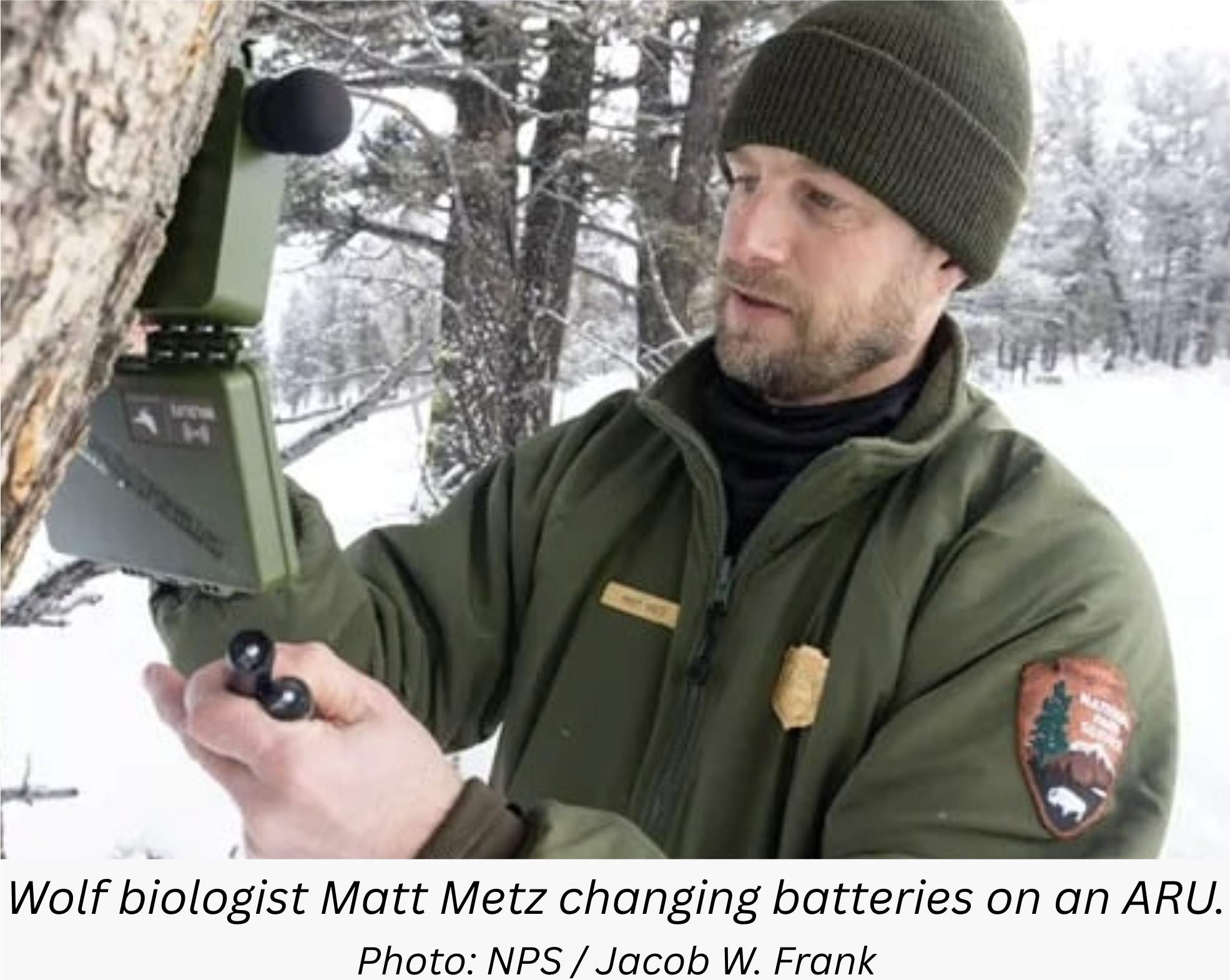
In total, 48 ARUs record continuously, capturing not only wolf vocalizations but the entire Yellowstone soundscape. This means the data can also be used by researchers studying other species. These ARUs have already documented thousands of wolf howling events, recording vocalizations occurring within a couple of miles of each unit. This massive, non-invasive dataset may allow researchers to track and quantify wolf vocal activity and inter-pack interactions across the landscape in ways never before possible.
A World First: Audio-Recording Wolf Collars
For the first time ever, in December 2024 and February 2025, four wolves from the 8 Mile, Rescue Creek, and Junction Butte packs, were equipped with audio logger devices, attached to GPS collars, capable of capturing up to two months of continuous sound. Unlike traditional GPS collars that only tell researchers where a wolf goes, these devices reveal what a wolf experiences.
Two collars have already been retrieved, and the insights are remarkable. One collared wolf dispersed from its pack, offering a rare glimpse into how vocal behavior changes during dispersal. This wolf was largely silent unless near other wolves, likely an adaptive strategy to locate a new pack without drawing unwanted attention. Another collared wolf was highly vocal and social, frequently engaging acoustically with packmates.
One of the most exciting collared wolves is 1478F, the daughter of Yellowstone’s well-known 907F. She gave birth to pups this spring while still wearing the audio collar. Although her collar is not scheduled for retrieval anytime soon, researchers are hopeful it has captured rare vocalizations associated with pup-rearing, sounds that have almost never been documented in wild wolves.
In late January 2026, nine more wolves were fitted with audio logger devices, with plans to eventually deploy them on all GPS-collared wolves in Yellowstone. Click here to see a wolf get collared in Yellowstone.
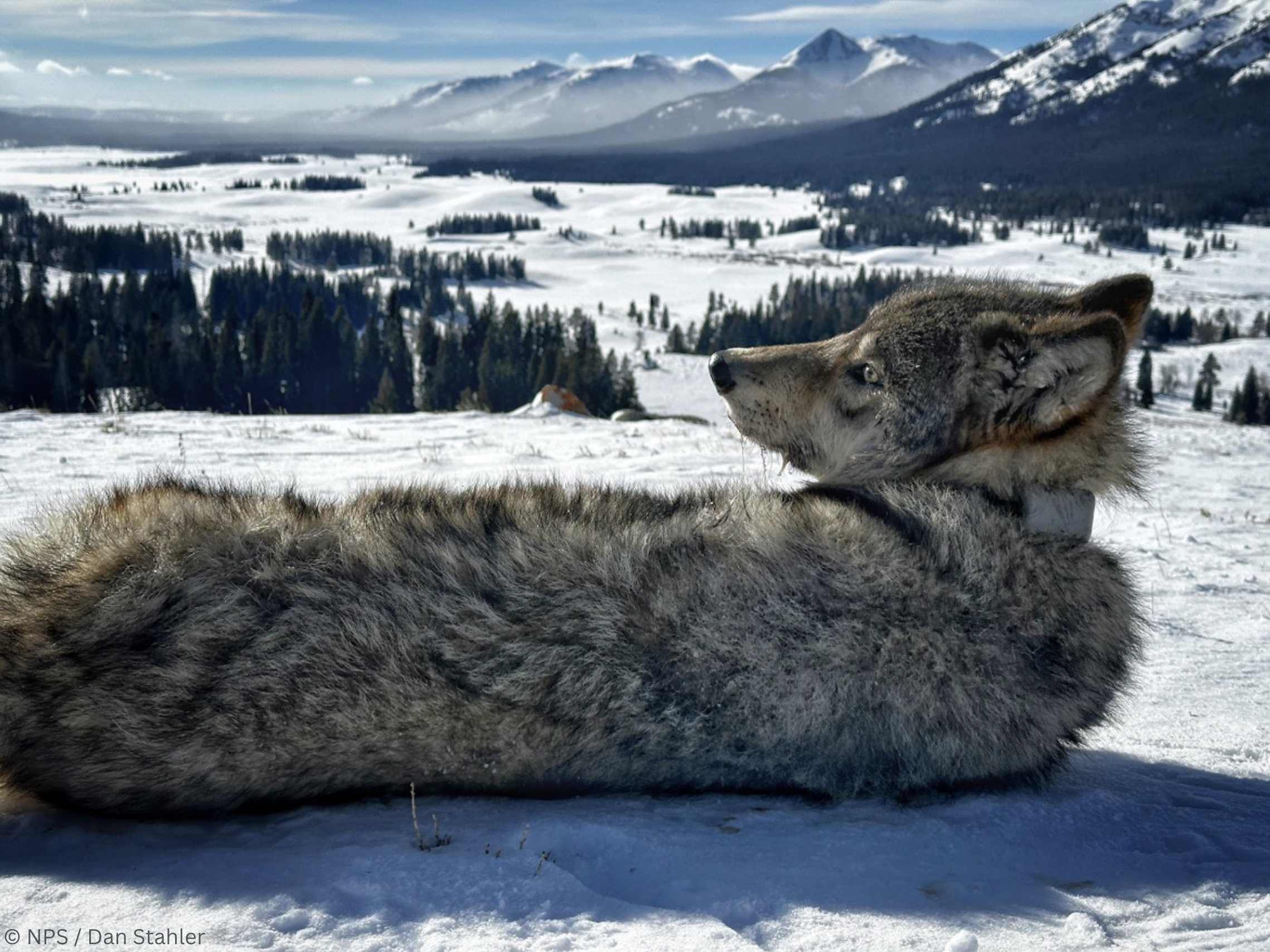
1561F of the 8 Mile pack wakes up following her capture and fitting with an audio logger which will record her 24/7 for a couple months.
The Future of Non-Invasive Science
With tens of thousands of hours of audio, the challenge becomes analysis. To meet it, the research team is developing an artificial intelligence–based classifier capable of distinguishing wolf howls from other animal sounds and environmental noise. This emerging technology may eventually allow researchers to identify individual wolves and estimate pack size without relying on traps or traditional radio collars.
Such advances could lead to population estimates based entirely on non-invasive methods—an approach that is not only more ethical, but also scalable far beyond Yellowstone and applicable to other species worldwide.
This bioacoustics project is doing more than collecting data, it’s changing how we understand wolves. By pairing cutting-edge technology with traditional fieldwork, researchers are uncovering the social, behavioral, and communicative complexity of one of North America’s most iconic species. All while bringing us closer to answering a question humans have wondered about for centuries: What are wolves really saying?
Living with Wolves is proud to fund this research. By supporting our work, you help make innovative programs like this possible — advancing understanding, informing conservation, and protecting wolves for generations to come.