For generations, folklore and popular culture have shaped our fear of wolves, often portraying them as a threat to people. Yet decades of research show that wild wolves overwhelmingly avoid humans and documented attacks are exceptionally rare. Understanding the difference between perception and actual risk is essential to replacing fear with knowledge—and building a more informed approach to coexistence.
Beyond the Big Bad Wolf
For generations, wolves have been portrayed as dangerous predators waiting to attack people. That image is deeply embedded in Western culture—from Little Red Riding Hood and The Three Little Pigs to modern books, movies and news stories. Many of us encounter stories about frightening wolves long before we ever encounter a real one.
While wolves are wild animals and should be treated with caution and respect, the documented risk they pose to people in North America is extraordinarily low.
That does not mean wolves are incapable of harming people. They are large predators, and under certain circumstances, attacks have occurred. But when researchers have examined the documented cases, a consistent picture emerges: wolf attacks are exceptionally rare, and the circumstances surrounding them are often very different from the Hollywood image of a healthy wolf simply deciding to hunt a person.
Putting Wolf Attacks into Perspective
What the Research Tells Us
In 2002, the Norwegian Institute for Nature Research (NINA) published The Fear of Wolves: A Review of Wolf Attacks on Humans, an extensive review of documented wolf attacks covering approximately 400 years of history in North America and Eurasia.
The researchers were careful about the limitations of their data. Historical records are incomplete, documentation varies from case to case, and the report was not intended to be a complete census of every wolf attack that had ever occurred. Instead, the authors examined the cases they could document and looked for patterns in when and why attacks occurred.
Four factors emerged repeatedly:
- Rabies
- Habituation
- Provocation or defensive encounters
- Highly modified environments
In 2021, the same research group published Wolf attacks on humans: an update for 2002-2020 examining documented attacks worldwide during that period. Both reports provide detailed descriptions of individual incidents and a broader global overview of wolf attacks for readers interested in learning more. For the purpose of this article, we will focus on wolf attacks in North America.
How Rare Are Wolf Attacks in North America?
Documented attacks by wild wolves on people are exceptionally rare in North America. Researchers have compiled cases spanning more than four centuries, but differences in how incidents are recorded and classified make it difficult to establish a reliable total for nonfatal attacks.
By the early 20th century, gray wolves had been eliminated from much of the contiguous United States, although populations remained in Alaska, Canada, and Minnesota. In 2002, Mark E. McNay authored A Case History of Wolf-Human Encounters in Alaska and Canada, a review of documented encounters between wolves and humans from 1900 through 2001. The review documented 16 cases in Alaska and Canada in which wild, apparently healthy wolves bit people or bit into their clothing. In two cases, the people bitten were accompanied by dogs. Six of the bites were considered severe, but none were considered life-threatening.
Since 1900, two fatal cases have been attributed to wild wolves: one in Saskatchewan in 2005 and one in Alaska in 2010. The Saskatchewan case has some uncertainty surrounding whether wolves or a bear were responsible for the death.
As the 2002 NINA report put it, “The risks of being attacked by a wolf are not zero, but are clearly so low that they are virtually impossible to quantify.”
The documented cases also show why it is important to look beyond the number of incidents. Some attacks have involved unusual circumstances, including habituation to people, access to human food, abnormal behavior or poor physical condition. Understanding these circumstances help put the risk into perspective.
In the lower 48 states, documented attacks are even rarer. No attacks on humans have been documented since the reintroduction of wolves to the Northern Rockies in the mid-1990s. One well-documented modern incident occurred in Minnesota in 2013, when a wolf bit a teenage camper near Lake Winnibigoshish. The wolf was subsequently captured, and investigators determined that it was not rabid but had severe physical abnormalities, including a deformed jaw, that likely impaired its ability to hunt normally.
Why Do Wolf Attacks Happen?
Rare events are worth understanding precisely because they can tell us something about the circumstances that increase risk. The research does not suggest that all wolf attacks happen for one reason. Instead, several different types of encounters have been documented.
Rabies and Other Health Factors
Historically, rabies has been one of the most important factors associated with wolf attacks on people. Rabies can cause dramatic changes in an animal’s behavior, including abnormal aggression and a loss of normal wariness. This distinction matters. A rabid wolf is not behaving like a healthy wolf. Using attacks by rabid animals to describe the normal behavior of wolves can create a misleading picture of the species.
Wolves are not considered a primary host for rabies, like bats, raccoons, skunks, and dogs in North America. Instead, they can contract the disease from other infected wildlife. As rabies-control programs have reduced the prevalence of the disease in many regions, the number of rabies-associated wolf attacks has also declined.
Other health factors, including disease or severe physical debilitation, such as from starvation, may also contribute to abnormal behavior in wolves. Incidents involving wolves in poor physical condition are often perpetrated by a lone wolf and rarely result in serious injury.
Habituation
Another recurring factor is habituation—the loss of a wolf’s natural wariness of people. Wild wolves generally avoid humans. But repeated exposure to people without negative consequences can change that behavior, particularly when wolves learn that human-dominated areas provide food. Garbage, livestock, pet food, carcasses and other food sources can all create opportunities for wolves to associate people or developed areas with food.
A wolf that repeatedly approaches people, campsites or homes without consequence can become increasingly comfortable around humans. That does not mean every habituated wolf will become aggressive, but it can remove one of the most important protections people have: a wolf’s natural tendency to keep its distance.
For example, in the 1970s, truckers traveling along Alaska’s James W. Dalton Highway reportedly fed wolves en route to the oil fields at Prudhoe Bay. Some of these habituated wolves reportedly inflicted minor bites, possibly in connection with being hand-fed. However, no formal records of these incidents have been identified.
Maintaining wolves’ natural wariness of people is therefore an important part of preventing conflict.
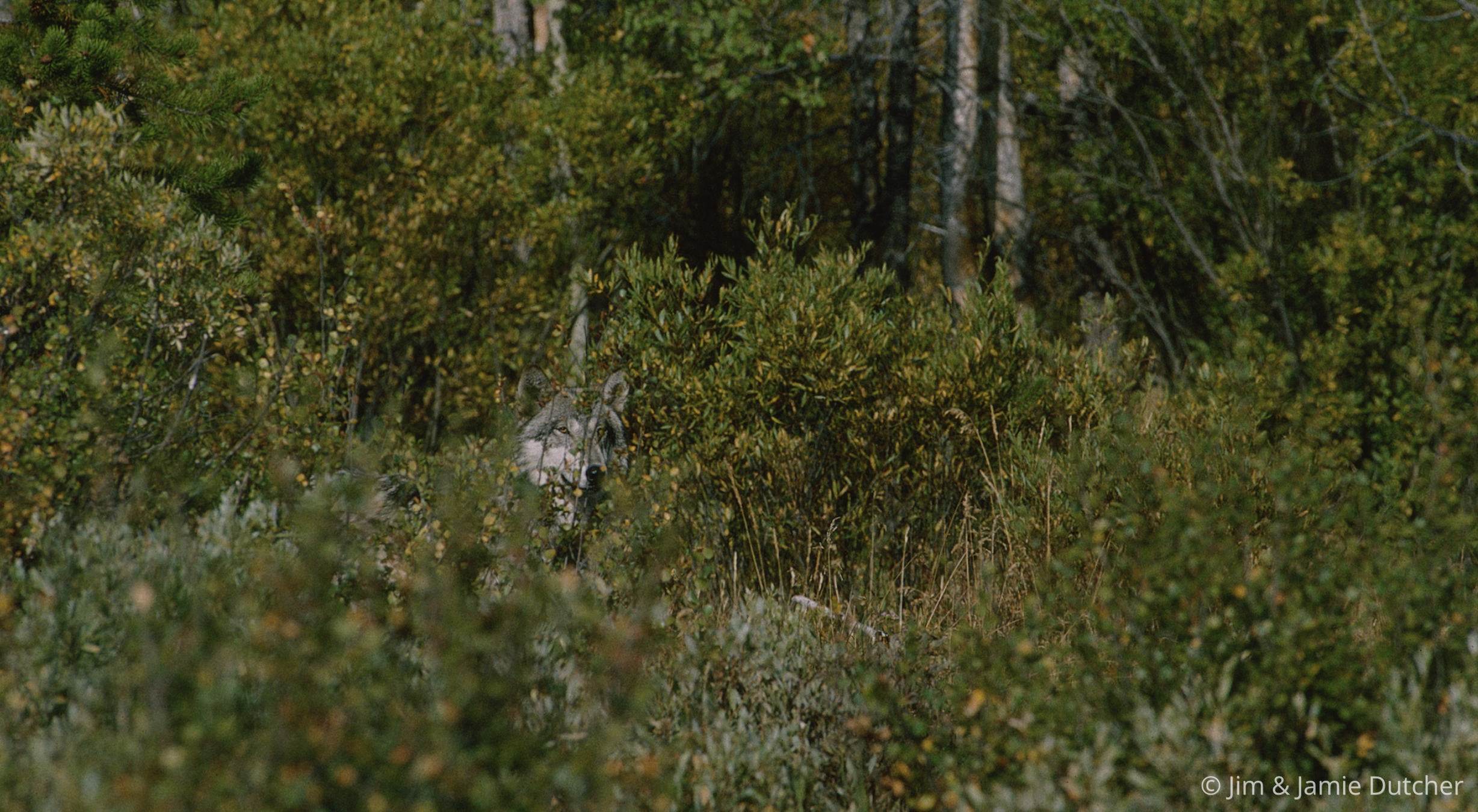
Provocation and Defensive Encounters
Not every bite or aggressive encounter is predatory. The NINA researchers distinguished predatory attacks from defensive or investigative encounters. A wolf that is cornered, trapped, approached near a den or pups, or confronted with a dog may respond defensively.
Circumstances that can increase the possibility of a defensive encounter include:
- Approaching a wolf
- Approaching a den or rendezvous site
- Approaching pups
- Cornering or trapping a wolf
- Attempting to intervene in an encounter between a wolf and another animal
- Allowing a dog to approach or chase a wolf
This distinction is important because an animal defending itself is behaving differently from an animal that has identified a person as prey.
Highly Modified Environments
The 2002 review also found that some of the worst historical episodes of wolf attacks occurred in highly modified environments where wolves and people were living in unusually close proximity.
In historical Europe and parts of Asia, forests had been cleared, wild prey had been depleted, livestock were abundant, and wolves had extensive opportunities to encounter people. In some places, children were responsible for tending livestock or spent significant amounts of time in areas inhabited by wolves.
Modern cases can have different but comparable circumstances. Areas with abundant food attractants, unsecured garbage, livestock, pets or other human-associated food sources can bring wolves and people into closer contact.
The lesson is not that wolves become dangerous simply because they live near people. Wolves are highly adaptable and can live in landscapes influenced by humans while maintaining their natural avoidance of us. The concern arises when wolves begin repeatedly associating people or human-dominated areas with food.
Yellowstone National Park offers an example of how wildlife managers address habituation. With millions of visitors each year, wolves in the park have frequent exposure to people. Most wolves avoid close contact with humans and move away when approached, although some have displayed curious or habituated behavior.
When wolves become too comfortable around people, park authorities may use hazing, also known as aversive conditioning, to reinforce their natural wariness. These techniques can include loud noises, cracker shells, paintball guns, and rubber bullets. In most cases, hazing has helped discourage wolves from approaching people. Young wolves, particularly yearlings, may be more likely to investigate people as they learn and develop behaviors, making early intervention important to prevent habituation from becoming established.
Despite the high number of visitors to Yellowstone each year, documented attacks on people by wild wolves in the park have not occurred. This example illustrates how maintaining wolves’ natural wariness, alongside responsible human behavior, can help reduce the risk of conflict.
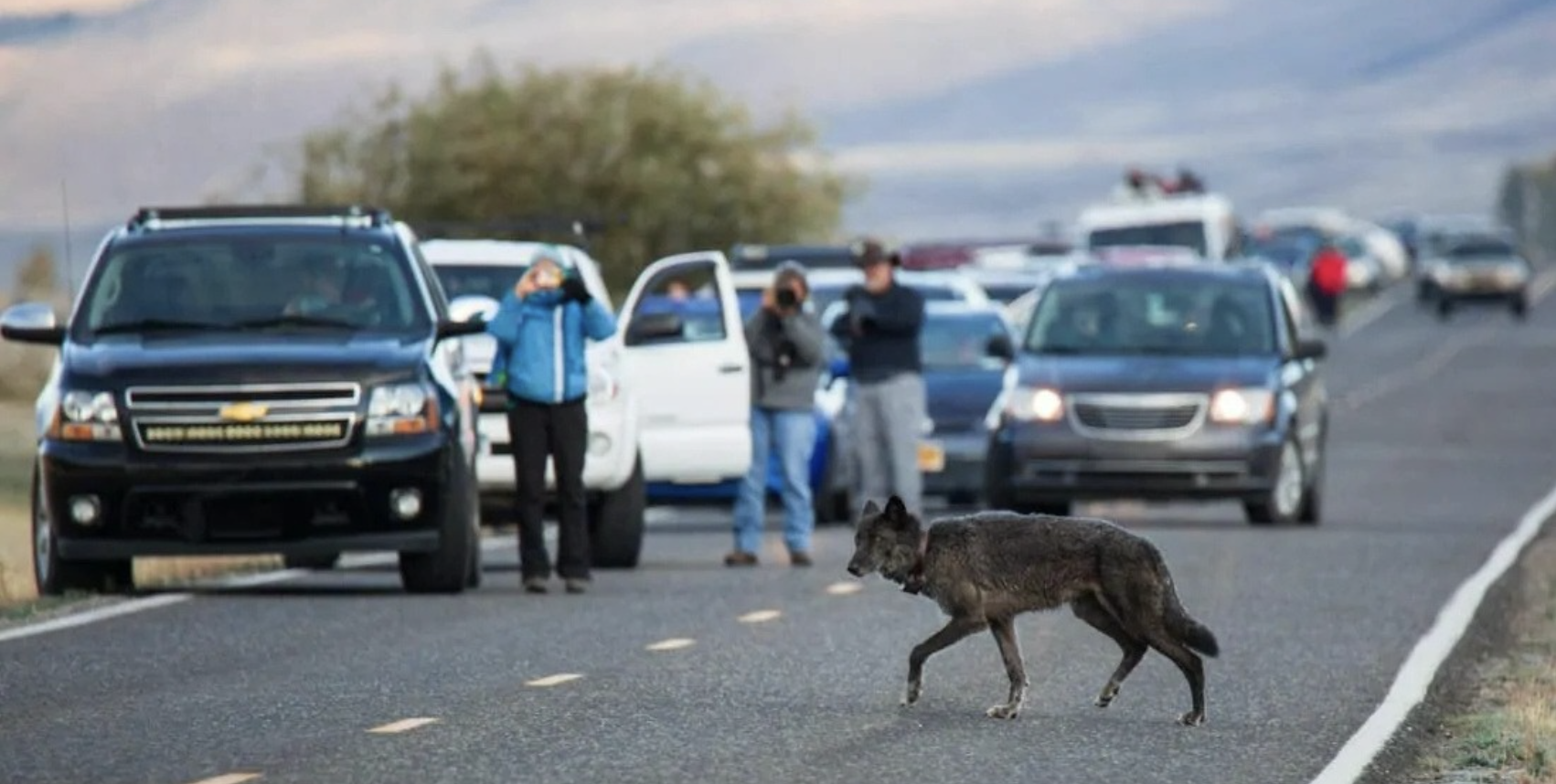
(photo courtesy of Yellowstone Safari Company)
Fear Versus Reality
Why, then, do wolves inspire so much fear? Part of the answer may be cultural. People tend to be especially wary of animals that eat other animals. Predators possess traits that humans instinctively recognize as weapons: teeth, claws, strength, speed and the ability to pursue prey.
We also have a long cultural history of associating wolves with danger. Stories about wolves have been passed from generation to generation, often portraying them as cunning predators waiting for an opportunity to attack. Those stories can influence how we interpret real encounters with wolves today.
At the same time, we can make the opposite mistake with animals that eat plants. Moose, bison, cattle and horses are not predators, but they are powerful animals capable of causing serious injury. Being a predator does not automatically make an animal dangerous to people. And being an herbivore does not automatically make an animal safe.
The likelihood of being attacked by a wolf is extraordinarily small. The 2002 researchers concluded that the risk was so low that it could not meaningfully be quantified.
That does not mean people should approach wolves. It means that we can take wolf behavior seriously without assuming that a wolf’s presence alone signals danger.
What Should People Actually Do Around Wolves?
The best response to living alongside wolves is not to ignore them, but to understand them.
A few simple principles can reduce the possibility of conflict:
- Give wolves space.
- Never approach or pursue a wolf.
- Do not feed wildlife.
- Keep pets under control, particularly in areas where wolves are present.
- Do not leave food, garbage or other attractants accessible to wildlife.
- Do not approach dens, rendezvous sites or wolf pups.
A healthy wild wolf’s natural response to a person is generally to avoid them. When wolves begin losing that wariness, it is important to take the behavior seriously—not because an attack is inevitable, but because maintaining a healthy distance between people and wildlife is one of the best ways to prevent conflict.
Respect, Not Fear
Wolves are wild animals. They deserve the same respect and caution that we give to any large wild animal.
More than a century of modern records in North America demonstrates how rarely wild wolves attack people. The research that does exist also gives us something more valuable than a simple list of attacks: it helps us understand the circumstances in which those rare incidents occur.
Rabies. Habituation. Defensive encounters. Food attractants. Human-dominated environments.
These factors do not make an attack inevitable. They help explain why most encounters end with a wolf moving away—and why the unusual encounters that escalate into aggression deserve careful attention.
Understanding wolves does not mean pretending that risk does not exist. It means putting that risk in perspective. And when it comes to wolves, the evidence tells us that we should respect them, understand them and give them space—not fear them as though an attack is waiting around the corner.