
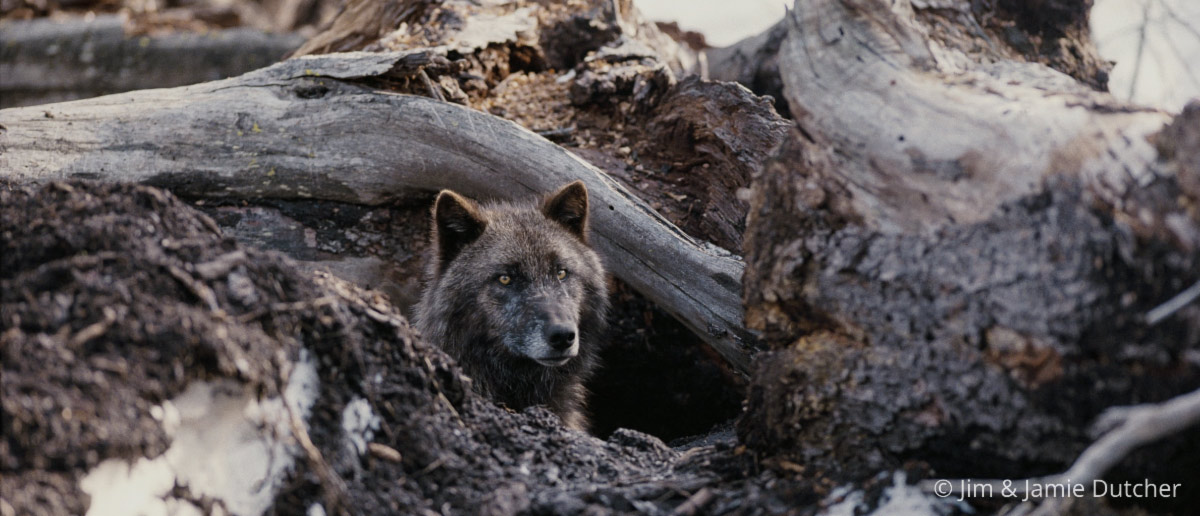
Poaching is the Leading Cause of Death for Wolves in the Great Lakes Region
A new groundbreaking study analyzing more than a decade of data reveals a stark reality: even under full protection of the Endangered Species Act, wolves in the western Great Lakes region are still dying primarily at the hands of humans, with illegal poaching identified as the single leading cause of death.
Between 2010 and 2023, researchers examined GPS collar and mortality data from wolves in Minnesota, Wisconsin, and Michigan to better understand what is driving wolf deaths. Their findings show that 65% of recorded mortalities were human-caused, a category that includes illegal poaching and periods of legal hunting when federal protections were temporarily lifted.
During four of the fourteen years analyzed, wolves were temporarily delisted and legal hunting was permitted. Those periods contributed an additional 14 percent to total mortality, further compounding the overall human impact. See charts below for a detailed breakdown of human-caused mortality.
This research provides some of the clearest evidence to date that human actions, both legal and illegal, are the dominant force shaping wolf survival in the Great Lakes region. The findings underscore the urgent need for stronger wildlife law enforcement, more widely accepted conflict mitigation strategies, and a renewed focus on building public understanding and tolerance of wolves.
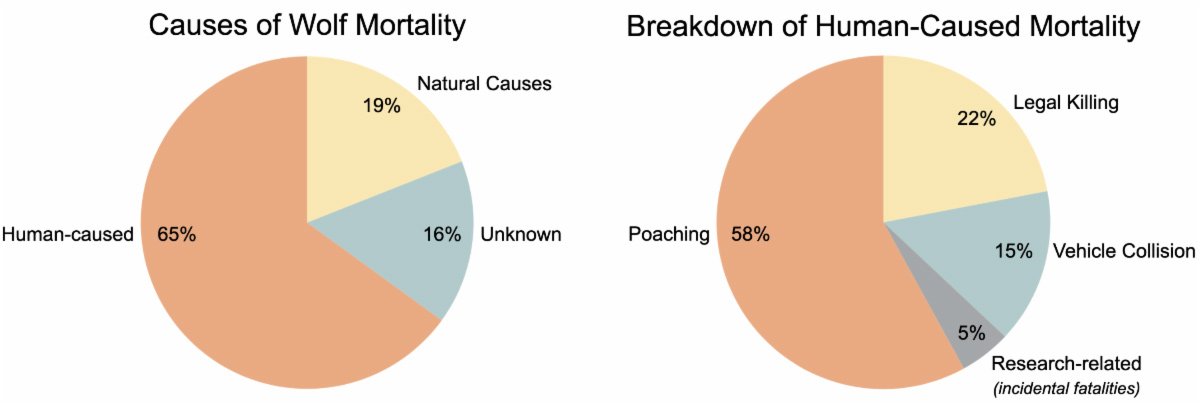
Values are rounded; subcategories reflect proportions within human-caused mortality.
 Each year on April 22, Earth Day reminds us that healthy ecosystems depend on balance, and that balance begins with predators.
For centuries, wolves have evolved to play a crucial role in regulating their ecosystems, from the survival of trees and riverbank vegetation to the health of prey populations.
As a keystone species, their presence shapes the health of entire ecosystems. When wolves are on the landscape, they regulate prey like deer and elk, not just in number but in behavior. This prevents overgrazing and allows vegetation to recover, especially in sensitive areas like riverbanks and young forests.
That recovery sets off a ripple effect. Trees and shrubs return. Birds, beavers, and fish follow. Rivers stabilize. Biodiversity increases. Without wolves, this balance begins to break down. Overgrazing intensifies, habitats degrade, and ecosystems lose resilience.
This Earth Day, we are reminded that wolves are the guardians of this delicate balance. It is about recognizing the role they play in the larger web of life, and our responsibility within it. Because when we work to keep wolves protected, we are helping to protect the systems that sustain us all.
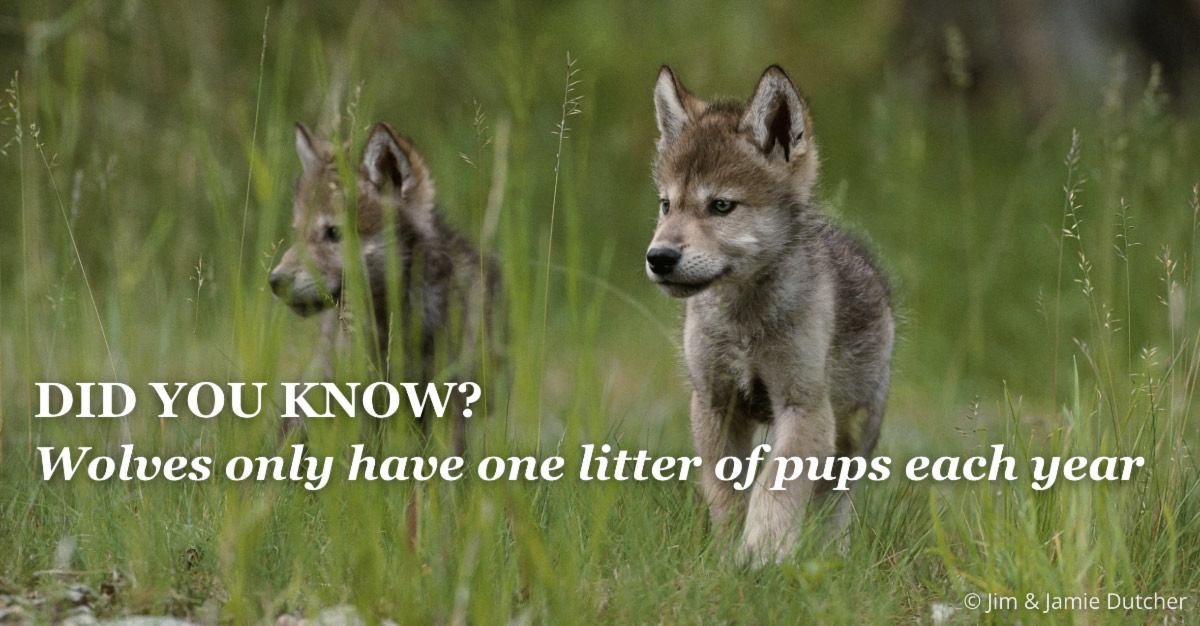
One of the most persistent myths is that wolves are prolific breeders, rapidly increasing their numbers and overwhelming landscapes—but the reality tells a very different story. Wolves have just one brief opportunity each year to reproduce, and most packs raise only a single litter. With a short breeding window, high pup mortality, and typically only one breeding pair per pack, raising pups is a complex and uncertain process that depends on the entire family. Read more to explore the realities of wolf reproduction and why each litter is so important to the survival of the entire pack.
From the Dutcher Archives
Celebrating the Legacy of the Sawtooth Pack
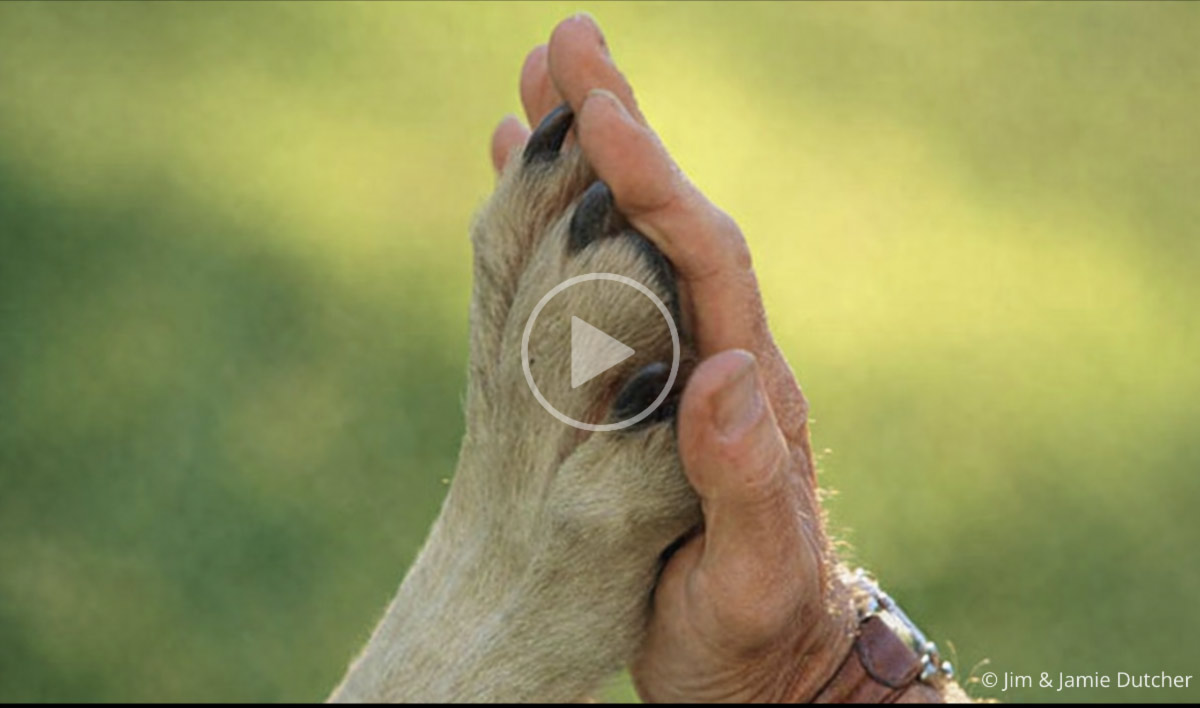
What began as a study of wolf behavior evolved into a deeper exploration of connection, communication, and coexistence. By living alongside them as social partners, the Dutchers gain rare insight into the bonds that shape wolf families and the intelligence behind their behavior. These wolves serve as ambassadors to wild wolves, helping bridge the gap between human understanding and the realities of life in the wild. As myths continue to fade, a new perspective emerges—one rooted in respect, knowledge, and shared space. The question remains: Will we make room for their return?

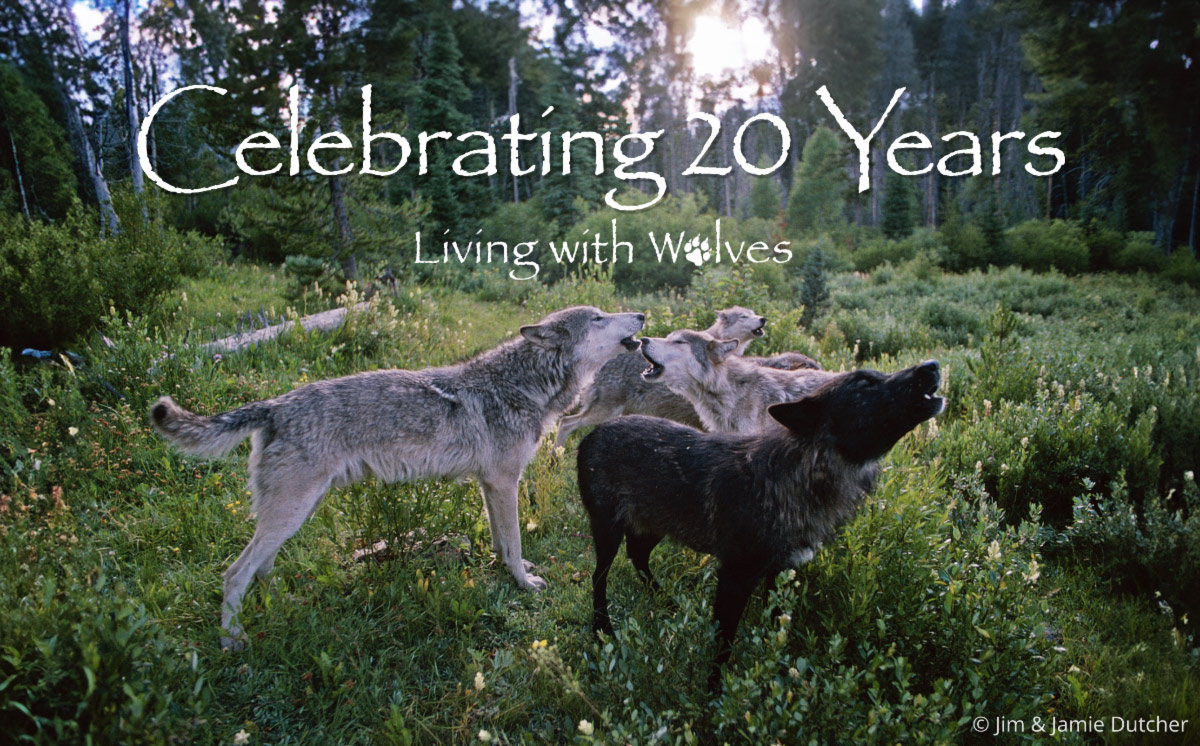
This year, Living with Wolves marks its 20th anniversary—a milestone made possible by many of you who have been with us every step of the way. We are deeply grateful for your enduring support. At the heart of our work has always been the Sawtooth Pack. As ambassadors for their species, they opened a window into the lives of wolves, helping people better understand their behavior, their bonds, and their place in the natural world.
When our land permits expired in the Sawtooth Mountains, we released the pack into their new enclosure on Nez Perce tribal lands to live out their lives. It is now more than thirty years since we said our goodbyes.
The visits we made from time to time were full of joy and tears in equal measure. The wolves always remembered us and rushed to greet us as old friends, whining, sniffing, and showering us with licks, even awkwardly trying to sit in our laps, perhaps remembering their days as pups.
As years went by, we would receive heartbreaking news that one had passed, and then another—feisty Wyakin, fearless Kamots, gentle Matsi. Piyip, one of Kamots’ and Chemukh’s three pups, was the last to leave us in 2013. In one day, 98,000 people shared his passing with us over the internet. Emotional messages poured in. The Sawtooth Pack had touched the hearts of people around the world.
We will never know for sure how they looked upon us. Were we members of their pack or familiar friends? We asked them to speak for past wolves that had been feared and persecuted, and for new wolves who were taking their first steps into an uncertain future.
The Sawtooth Pack rose to this challenge with more grace than we could have hoped for. We gave them our pledge that we would care for them, respect their space, and honor their message. In return they gave us their trust. We will never forget that gift.
With our sincere gratitude,

Our Mission: Living with Wolves is a non-profit organization dedicated to engaging the public worldwide in education, outreach and research to promote truth and understanding about wolves, while encouraging coexistence and inspiring people to take action to protect them.