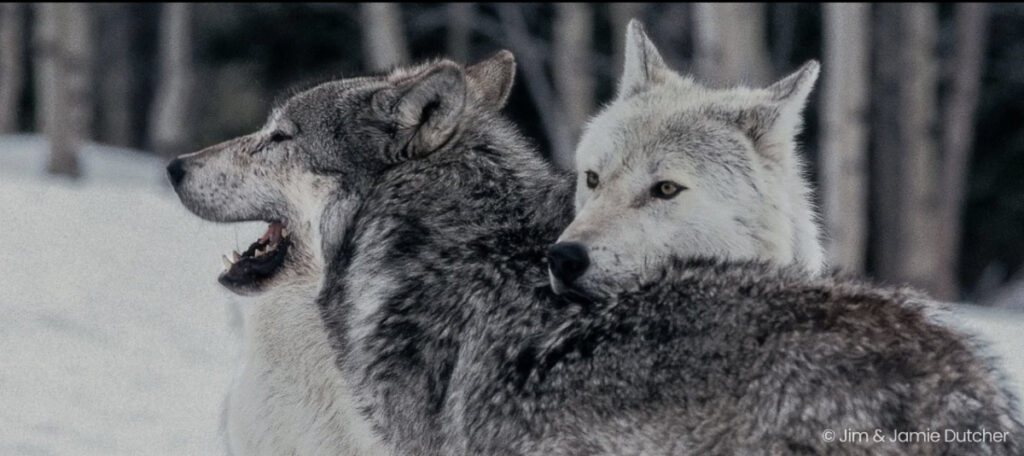

M-44 "Cyanide Bombs" Return to Public Lands and What It Means for Wolves After a brief federal prohibition, M-44 sodium cyanide devices, commonly known as "cyanide bombs," have once again been authorized for use across...
Celebrating 20 Years. This year, Living with Wolves marks its 20th anniversary—a milestone made possible by those of you who have been with us since the beginning, and many of you who have joined us along the...
Poaching is the Leading Cause of Death for Wolves in the Great Lakes Region A new groundbreaking study analyzing more than a decade of data reveals a stark reality: even under full protection of the Endangered Species...
MEXICAN GRAY WOLVES UNDER ATTACK There are fewer than 300 Mexican gray wolves in the wild across Arizona and New Mexico. Although Mexican gray wolves remain protected under the Endangered Species Act, Arizona lawmakers have introduced a...
RECENT DEVELOPMENTS IN FEDERAL WOLF POLICY Mexican Wolves Threatened with Delisting The theatrically named Enhancing Safety for Animals Act of 2025 (H.R. 4255) has been introduced in Congress and would delist one of the most endangered subspecies...
FEDERAL WOLF PROTECTIONS AT RISK H.R. 845, misleadingly named the “Pet and Livestock Protection Act,” would strip federal protections from gray wolves across the lower 48 states and block judicial review. The bill has passed the House...
WOLVES AT A CROSSROADS USFWS Backs Away from National Wolf Recovery Plan Last year, the U.S. Fish and Wildlife Service (USFWS) announced plans to develop the first-ever nationwide wolf recovery plan by December 2025. After...
Thanks to everyone who spoke up against H.R. 4754, the U.S. House Interior and Environment Appropriations bill that includes Section 128, a rider that would strip Endangered Species Act protections from gray wolves nationwide. House...
WOLVES ARE IN DANGER OF FEDERAL DELISTING Every year, Congress must pass budget bills to fund government agencies. Hidden in these massive spending bills are often “riders,” or amendments unrelated to the budget, slipped in...
MONTANA SETS DEADLIEST WOLF SEASON YET On August 21, 2025, the Montana Fish & Wildlife Commission approved a state record-high kill quota of 458 wolves for the 2025–2026 season—plus another 100 wolves to be killed...
Contains information related to marketing campaigns of the user. These are shared with Google AdWords / Google Ads when the Google Ads and Google Analytics accounts are linked together.
90 days
__utma
ID used to identify users and sessions
2 years after last activity
__utmt
Used to monitor number of Google Analytics server requests
10 minutes
__utmb
Used to distinguish new sessions and visits. This cookie is set when the GA.js javascript library is loaded and there is no existing __utmb cookie. The cookie is updated every time data is sent to the Google Analytics server.
30 minutes after last activity
__utmc
Used only with old Urchin versions of Google Analytics and not with GA.js. Was used to distinguish between new sessions and visits at the end of a session.
End of session (browser)
__utmz
Contains information about the traffic source or campaign that directed user to the website. The cookie is set when the GA.js javascript is loaded and updated when data is sent to the Google Anaytics server
6 months after last activity
__utmv
Contains custom information set by the web developer via the _setCustomVar method in Google Analytics. This cookie is updated every time new data is sent to the Google Analytics server.
2 years after last activity
__utmx
Used to determine whether a user is included in an A / B or Multivariate test.
18 months
_ga
ID used to identify users
2 years
_gali
Used by Google Analytics to determine which links on a page are being clicked
30 seconds
_ga_
ID used to identify users
2 years
_gid
ID used to identify users for 24 hours after last activity
24 hours
_gat
Used to monitor number of Google Analytics server requests when using Google Tag Manager