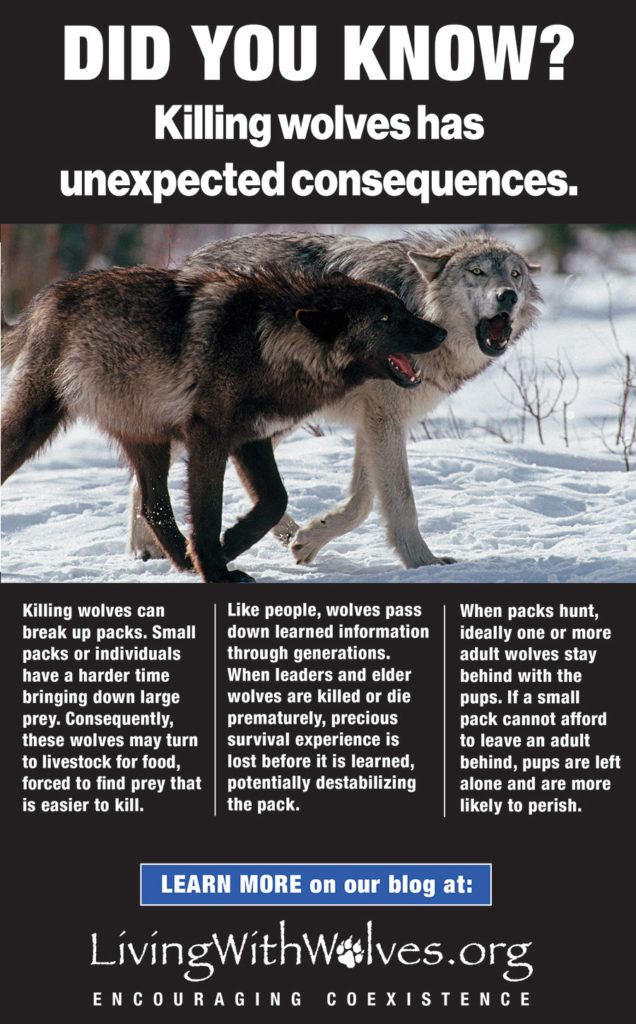
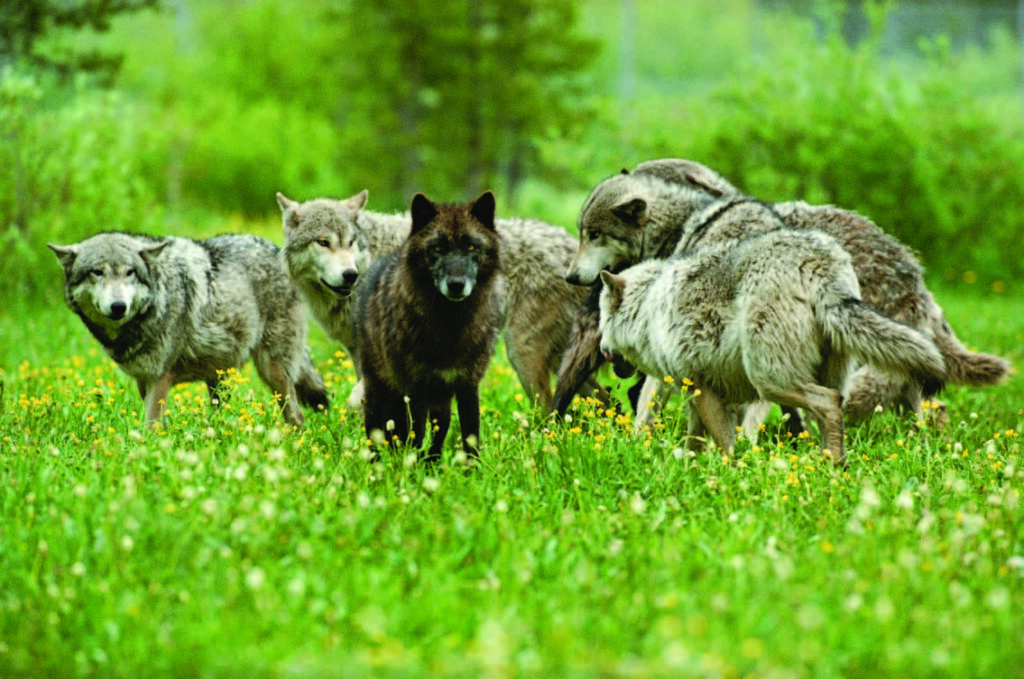
Contact: Dutcher, Garrick For Immediate Release, Feb. 3, 2023 (208) 721-8020 gdutcher@livingwithwolves.org livingwithwolves.org What Happens to the Pack When a Wolf Dies? When People Kill Wolves, Packs Become Less Stable and Can Cease to Exist....
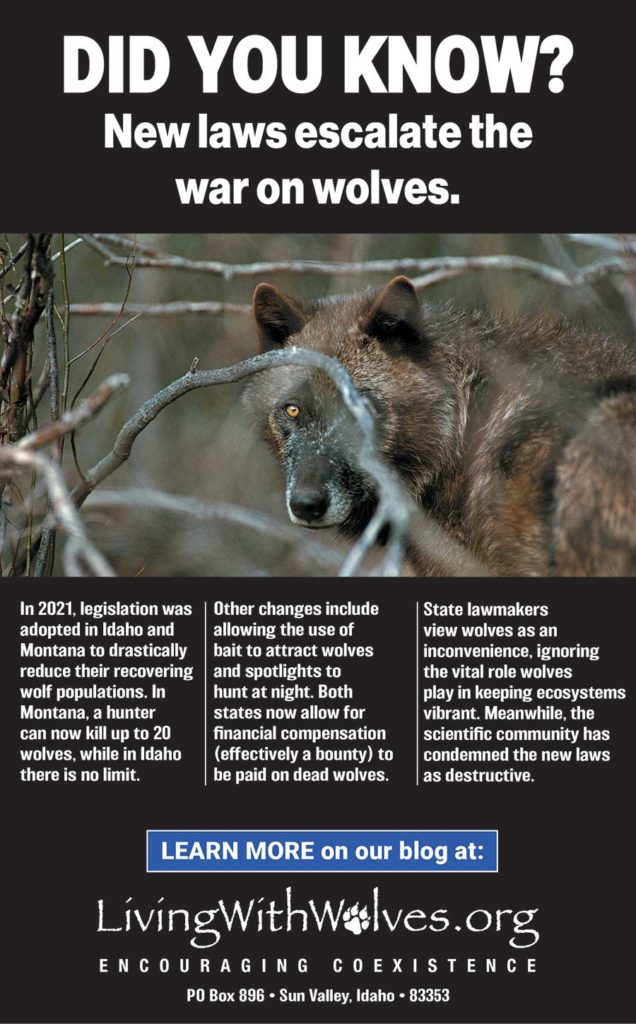
After Montana and Idaho passed a slew of laws to encourage more wolf killing, Yellowstone’s wolves suffered the deadliest year since they were reintroduced nearly three decades ago. In the 2021-2022 hunting and trapping season,...
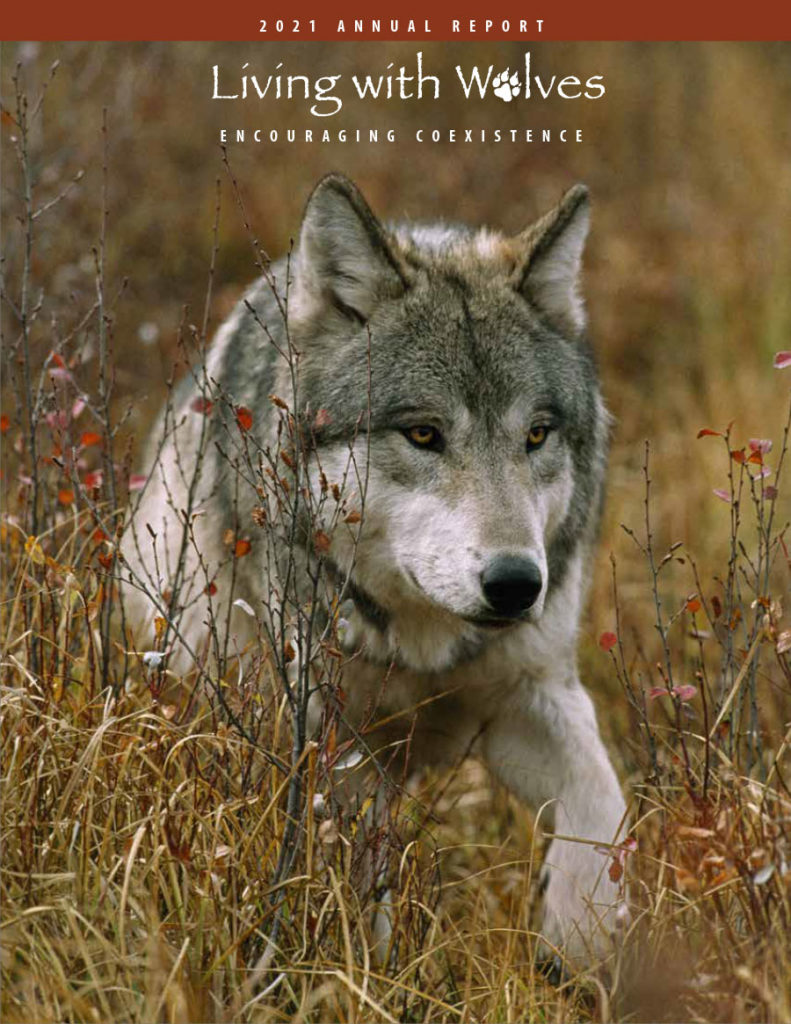
2021 Annual Report Dear Friends, Twenty-five years ago, our time at wolf camp in Idaho’s Sawtooth Mountains came to an end. We never could have foreseen all that would unfold in the years that followed....
Humankind is inclined to kill wolves, whenever they are perceived as a nuisance, with little regard for the consequences. There are ethical and ecological consequences in the way America’s recovering wolf population is being culled,...
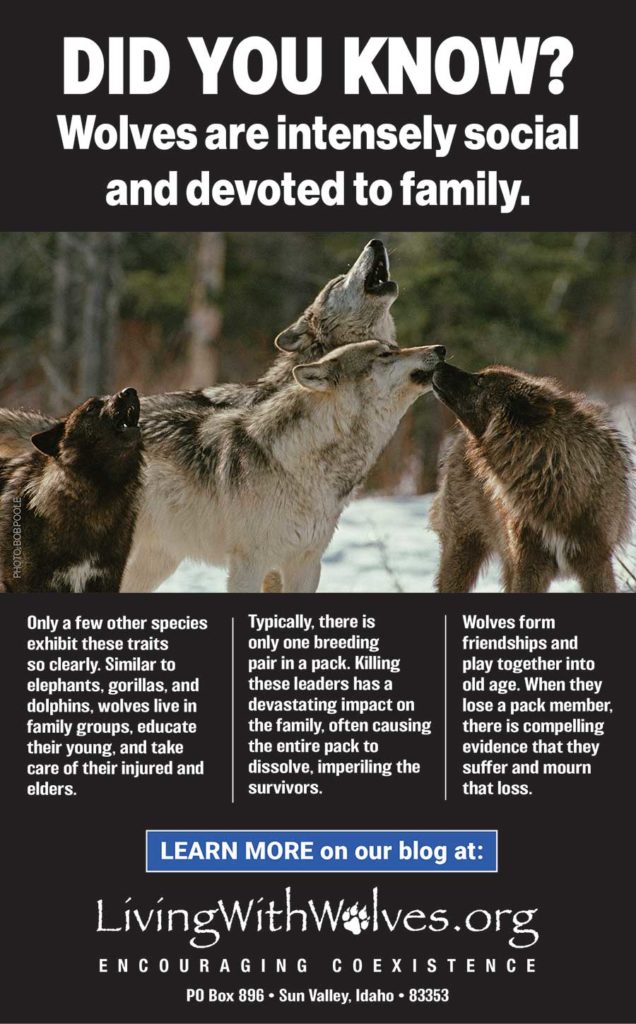
A wolf pack is an exceedingly complex social unit—an extended family of parents, offspring, siblings, aunts, uncles, and sometimes dispersers from other packs. There are old wolves that need to be cared for, pups that...
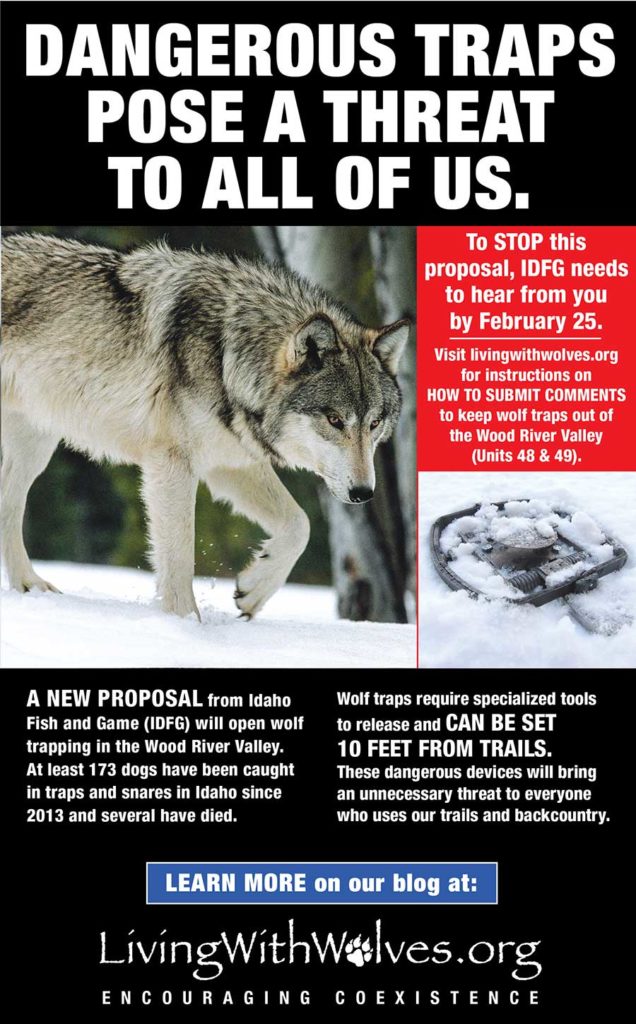
The Idaho state legislature passed a new wolf killing bill in May 2021, that goes into effect on July 1, 2021. Drafted by ranchers primarily to address the interests of livestock producers, the law...
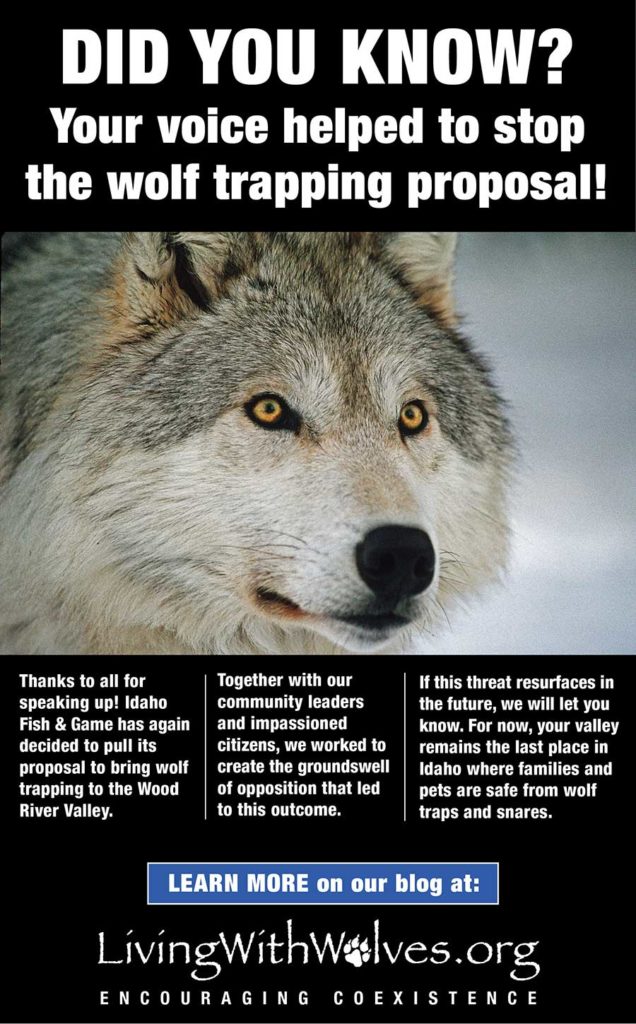
Once again, an attempt by Idaho's Department of Fish and Game (IDFG) to introduce wolf trapping in the Wood River Valley was averted through an overwhelming public outcry. This was the second time Blaine County...
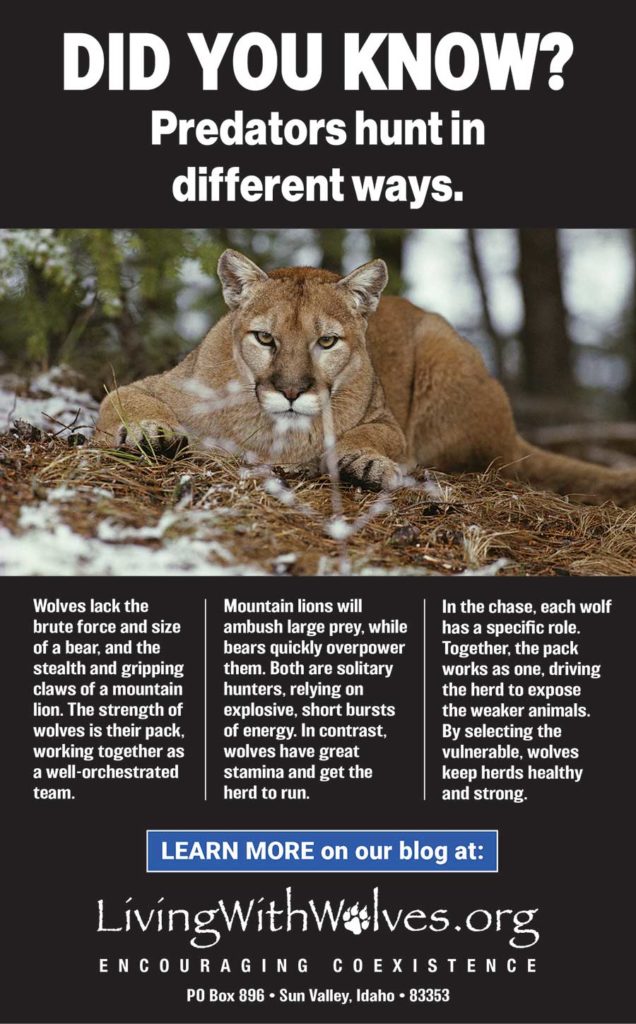
“For the strength of the Pack is the Wolf, and the strength of the Wolf is the Pack.”– Rudyard Kipling, The Jungle Book Wolves are social animals, living in large family groups, or “packs.” In...
The area surrounding Sun Valley, home to Living with Wolves, is the only remaining place in Idaho where wolf trapping is not allowed. This dog-friendly community opposed wolf trapping two years ago and stopped the...
Contains information related to marketing campaigns of the user. These are shared with Google AdWords / Google Ads when the Google Ads and Google Analytics accounts are linked together.
90 days
__utma
ID used to identify users and sessions
2 years after last activity
__utmt
Used to monitor number of Google Analytics server requests
10 minutes
__utmb
Used to distinguish new sessions and visits. This cookie is set when the GA.js javascript library is loaded and there is no existing __utmb cookie. The cookie is updated every time data is sent to the Google Analytics server.
30 minutes after last activity
__utmc
Used only with old Urchin versions of Google Analytics and not with GA.js. Was used to distinguish between new sessions and visits at the end of a session.
End of session (browser)
__utmz
Contains information about the traffic source or campaign that directed user to the website. The cookie is set when the GA.js javascript is loaded and updated when data is sent to the Google Anaytics server
6 months after last activity
__utmv
Contains custom information set by the web developer via the _setCustomVar method in Google Analytics. This cookie is updated every time new data is sent to the Google Analytics server.
2 years after last activity
__utmx
Used to determine whether a user is included in an A / B or Multivariate test.
18 months
_ga
ID used to identify users
2 years
_gali
Used by Google Analytics to determine which links on a page are being clicked
30 seconds
_ga_
ID used to identify users
2 years
_gid
ID used to identify users for 24 hours after last activity
24 hours
_gat
Used to monitor number of Google Analytics server requests when using Google Tag Manager