
What Is Living with Wolves? Living with Wolves is a national nonprofit organization uniquely positioned to inform you about wolves, a species unjustly persecuted by policy makers, ranchers, hunters and trappers. After the life-changing experience...
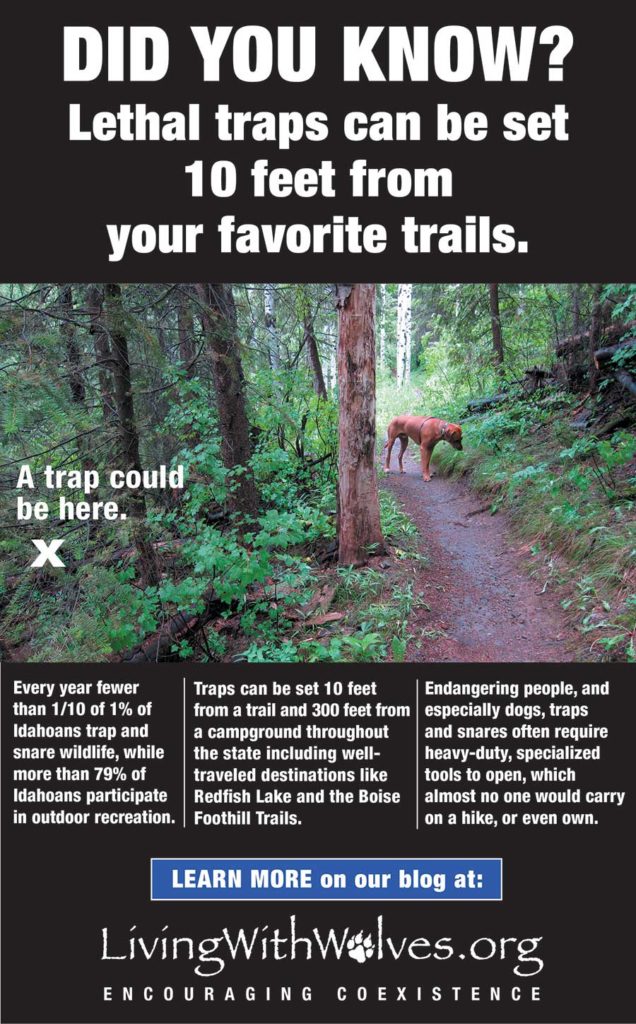
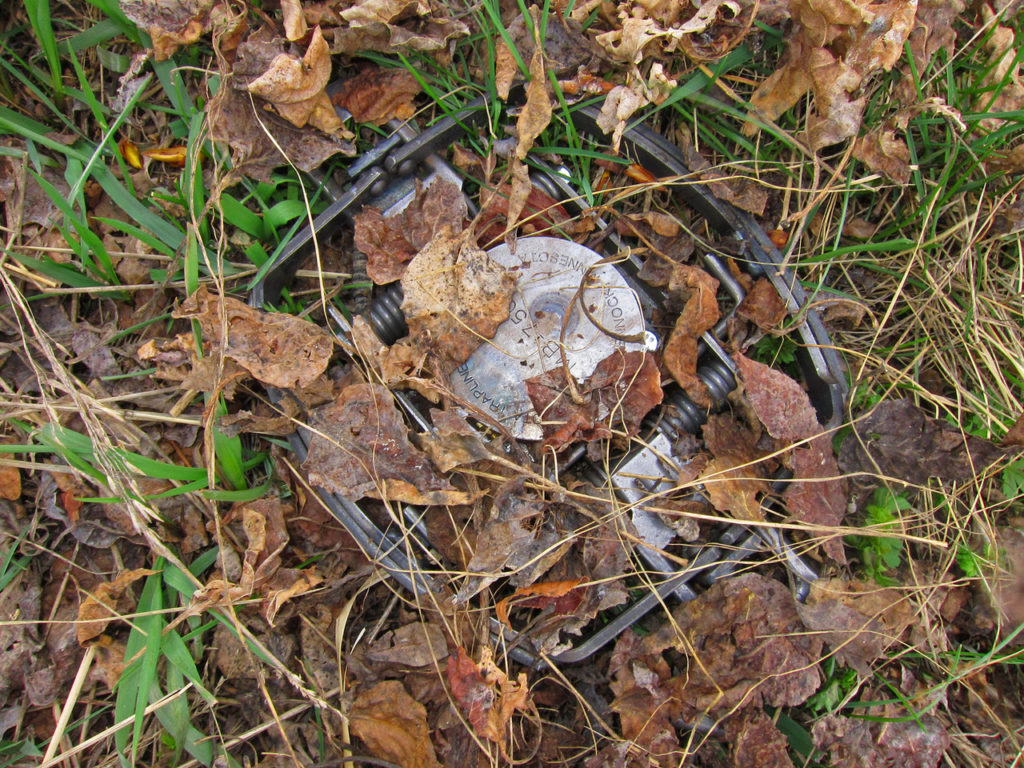
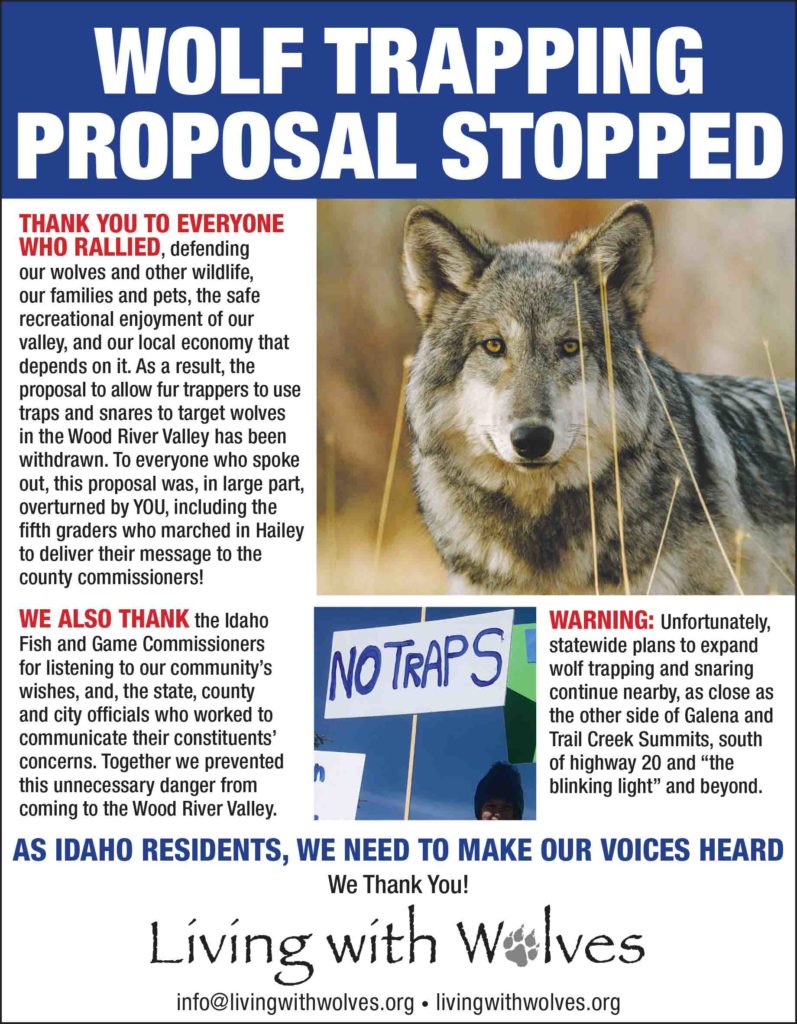
Traps May Be Closer Than You Realize Locals and tourists alike flock to Idaho’s gorgeous outdoor recreation areas throughout the year. Many of them enjoy the outdoors with their dogs. Most are probably unaware that...
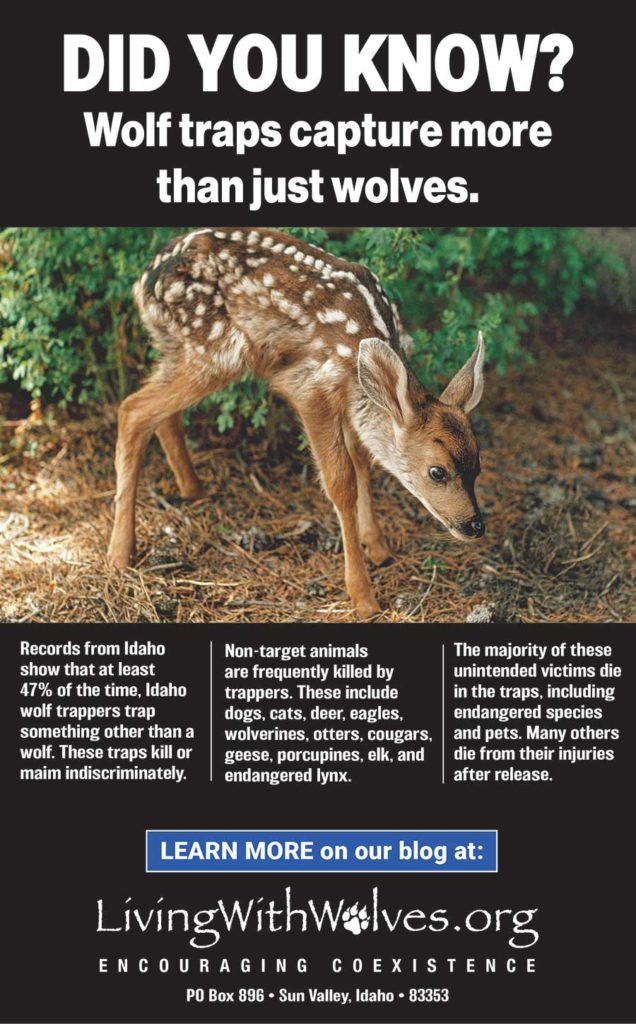
Traps are Indiscriminate For many thousands of years, people have been trapping animals. Originally, animals were trapped as a matter of survival for the trapper, providing food and fur for clothing and blankets. Most of...
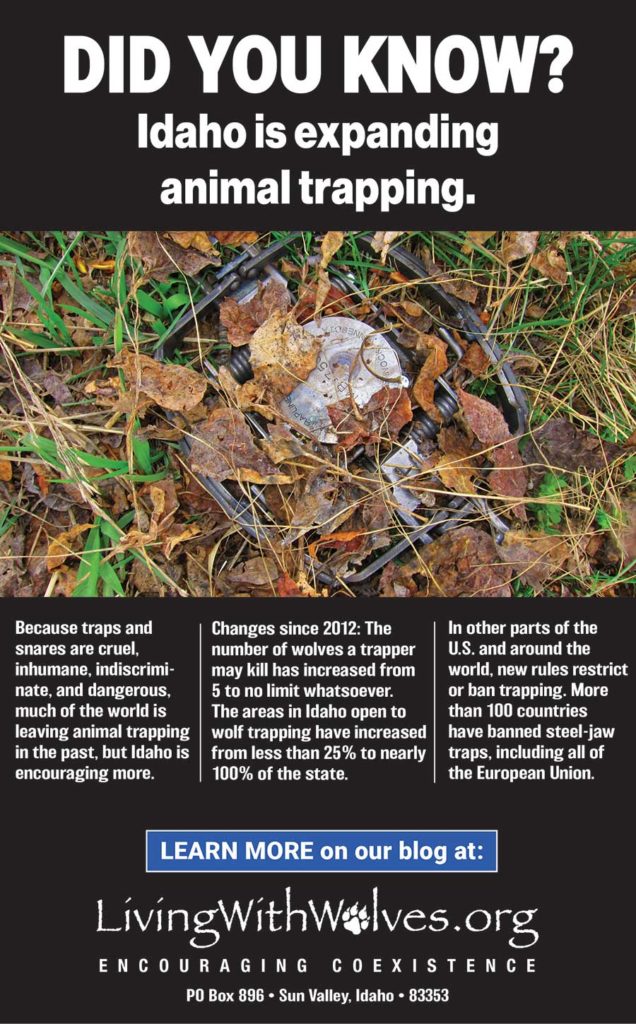
Trapping Trends Trapping animals is still common practice in many parts of the world. Although the demand for products made from animal fur has decreased in Europe and America, there is still a market for...
You can see a lot of wolf in your dog. We recognize the face, a broad mask that tapers into a long muzzle. We have looked into the eyes, bright with curiosity. We understand the...
Idaho is using your tax dollars to kill wolves. Of the many unconventional ways the State of Idaho has found to kill wolves, the most egregious was conceived in 2014 with the formation of the...
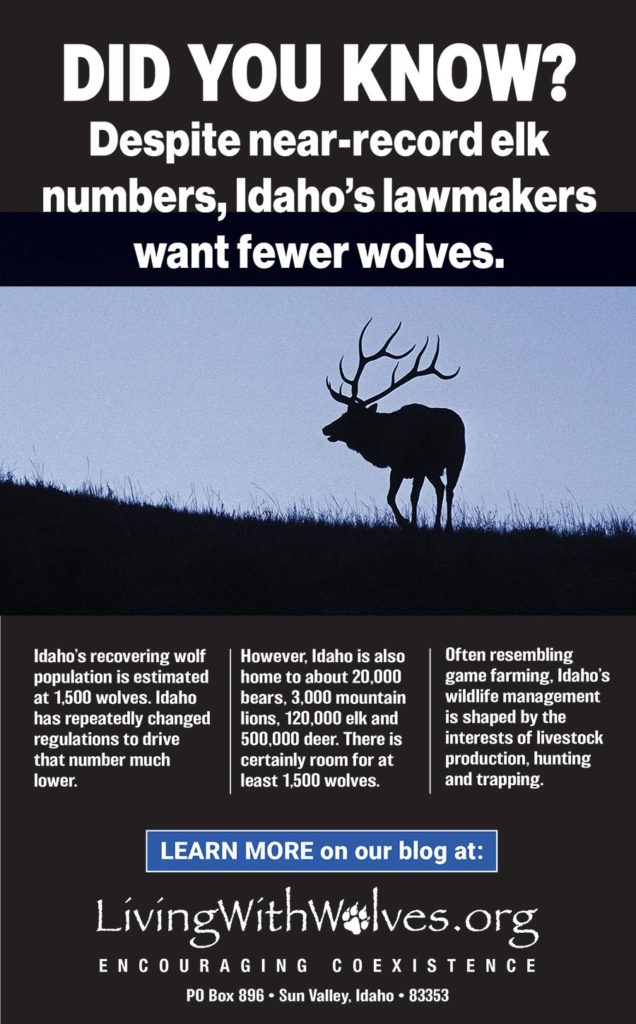
The estimated 1,500 wolves in Idaho are neither a lot nor too many wolves for Idaho’s vast wild lands. Comparing populations of several large predator species for context, Idaho is home to 20,000 bears, 3,000...
Keeping Livestock Safe There are many ways to keep wildlife and livestock safe when both are living side-by-side in wild places. An assortment of tools and techniques, known as “non-lethal deterrents,” are proven effective in...
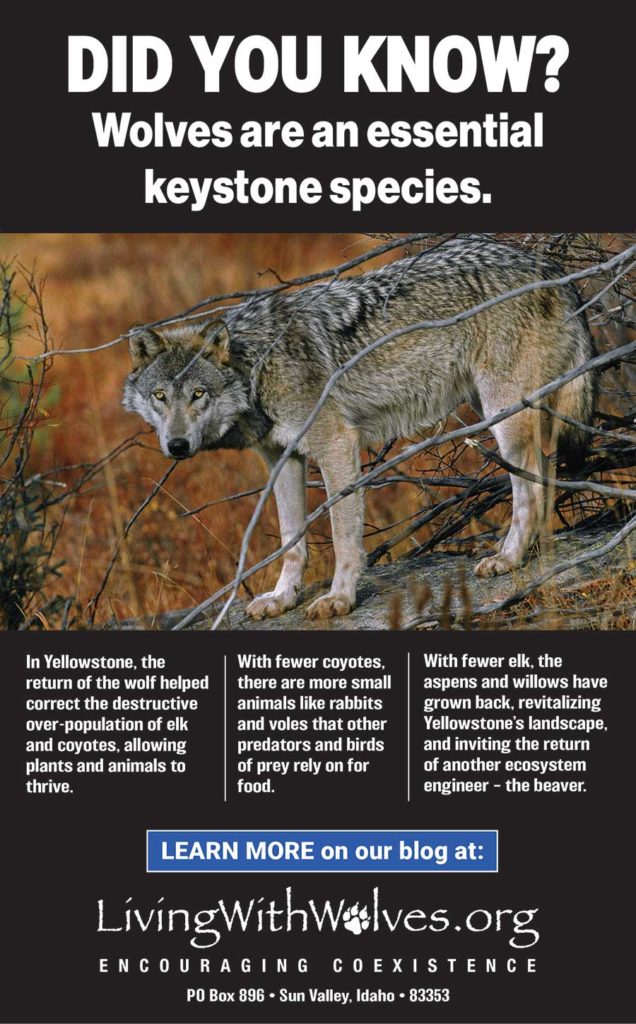
The wolf is a keystone species. What does that mean? Keystone species are animals that have a significant impact on the ecosystem despite relatively low population numbers. In the absence of keystone species, a dynamic...
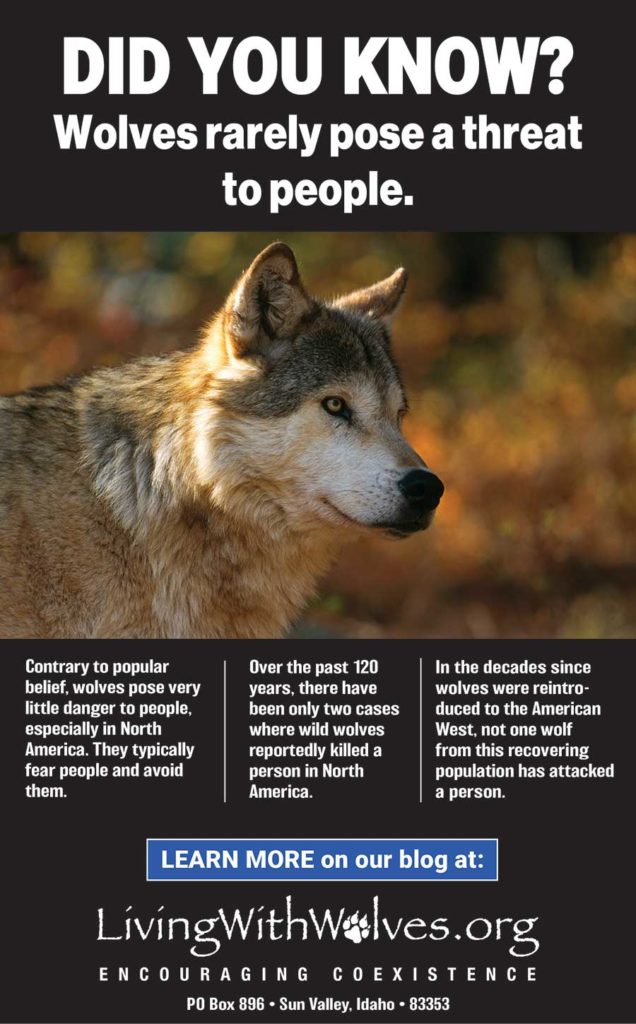
Wolves rarely pose a threat to people. Fear of wolves is disproportionate to the actual threat they present. Like many wild animals, wolves pose some danger to people, but in rare circumstances. It is important...
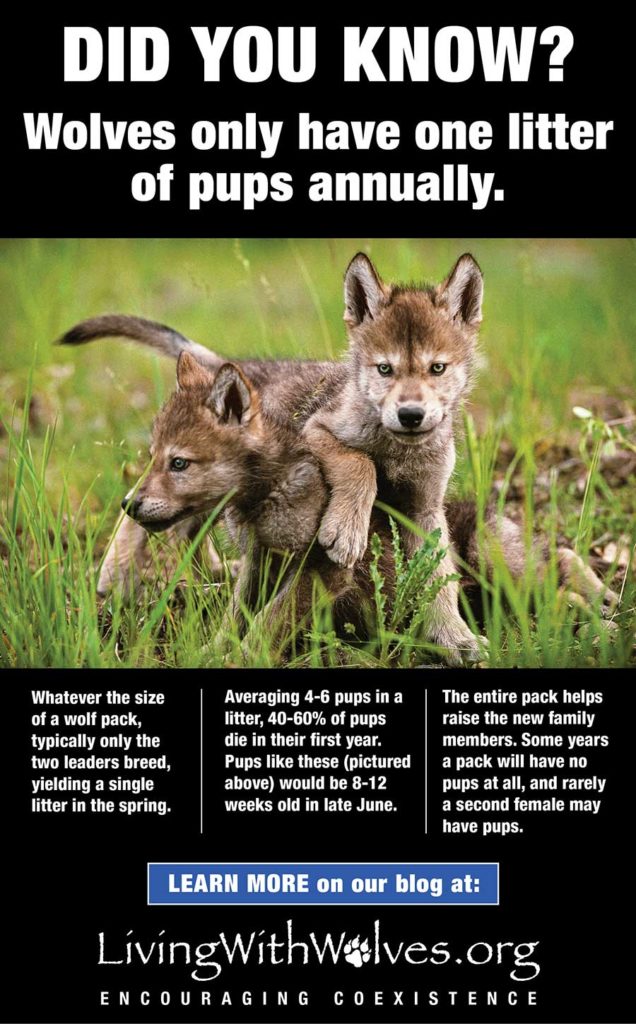
Wolves only have one litter of pups annually. There is an abundance of misinformation circulating about wolves. One topic often misrepresented has to do with their reproduction, leaving people with the false impression that wolves...
COMMENT PERIOD HAS CLOSED. Voice Your Opinion by May 6, 2020! It’s bad enough that traps are set along trails where people like to hike, but what is worse is that trappers don’t have to...
Educate your Pack at Home! During this unprecedented time, we are all having to do things differently and take life day by day. In light of ever-expanding cancellations and stay at home orders, a significant...
They are calling him "the People's Wolf." We, all of us, are on a path, but in which direction? Each of you will help determine where we are headed. What value do you see in...
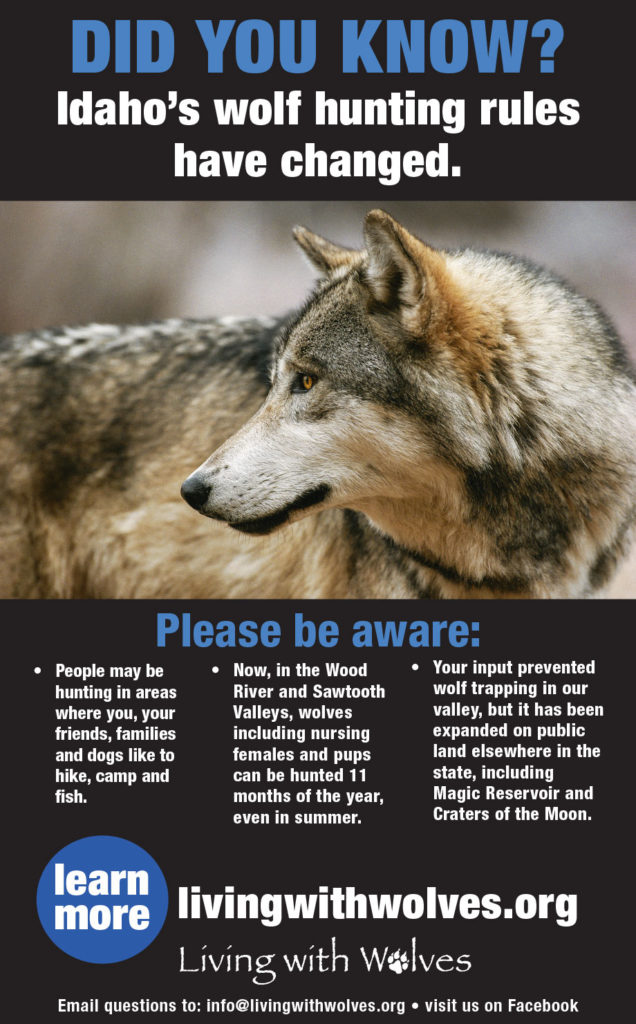
Did You Know? Idaho’s Wolf Hunting Rules Have Changed As the situation for Idaho's wolves continues to worsen, we at Living with Wolves will keep you informed. Thus far, 2020 has been a very bleak...
Call to Action The comment period closed February 10, 2020. Idaho wolves need your help A few weeks ago, the Idaho Department of Fish and Game (IDFG) changed their rules to allow a single individual...
When I joined Jim at Wolf Camp in the winter of 1993, he would tell me many stories about his early years with the Sawtooth Pack. One account that stands out was how a mountain lion killed the omega wolf and how the pack reacted to this loss.
Contains information related to marketing campaigns of the user. These are shared with Google AdWords / Google Ads when the Google Ads and Google Analytics accounts are linked together.
90 days
__utma
ID used to identify users and sessions
2 years after last activity
__utmt
Used to monitor number of Google Analytics server requests
10 minutes
__utmb
Used to distinguish new sessions and visits. This cookie is set when the GA.js javascript library is loaded and there is no existing __utmb cookie. The cookie is updated every time data is sent to the Google Analytics server.
30 minutes after last activity
__utmc
Used only with old Urchin versions of Google Analytics and not with GA.js. Was used to distinguish between new sessions and visits at the end of a session.
End of session (browser)
__utmz
Contains information about the traffic source or campaign that directed user to the website. The cookie is set when the GA.js javascript is loaded and updated when data is sent to the Google Anaytics server
6 months after last activity
__utmv
Contains custom information set by the web developer via the _setCustomVar method in Google Analytics. This cookie is updated every time new data is sent to the Google Analytics server.
2 years after last activity
__utmx
Used to determine whether a user is included in an A / B or Multivariate test.
18 months
_ga
ID used to identify users
2 years
_gali
Used by Google Analytics to determine which links on a page are being clicked
30 seconds
_ga_
ID used to identify users
2 years
_gid
ID used to identify users for 24 hours after last activity
24 hours
_gat
Used to monitor number of Google Analytics server requests when using Google Tag Manager